
Big Bags

FIBCs (Flexible Intermediate Bulk Container), also identified as big bags, bulk bags, jumbo bags or super sacks, are large size polypropylene bags with holding capacity of up to 2500 kg. Designed to endure the most challenging conditions, F.I.B.C.s give an important edge to the packaging industry and provide an innovative solution for both storing and transportation.

Innovation in packaging

Value for money.

Ideal for packaging of a very wide range of products.

Save time and reduce cost in the warehouse:

Once the big bags are filled, no extra packaging is required. Handling of big bags does not require any sophisticated warehouse machinery.

Save space in the warehouse:

The durable structure of big bags allows their stacking, for maximum exploitation of warehouse space. When not in use, big bags can be folded and stored away, taking up minimum storage space.

Specifications and sizing

  • Standard widths from 50cm to 125cm
  • Standard heights upon requirement
  • Safe working load(SWL) capacity up to 2,500 kg
  • Coated and uncoated cloth
  • With or without dust seal
  • With or without liner
  • All combinations of filling and discharge options
  • Printing up to 4 colours (per side)
  • Type A and B

Below, are the most common configurations for big bags.

Contact us , so our team can guide you through your needs.

Types of Bags

U-panel

The U-panel Bag body consists of 3 pieces, 1 long piece joined with 2 single pieces. It is designed to offer better storage and transportation of many different bulk goods.
These Bags are primarily used to store construction materials like gravel, sand, stone etc.
Other applications of the Standard Bags include storage of Chemicals, Food and Pharmaceuticals.
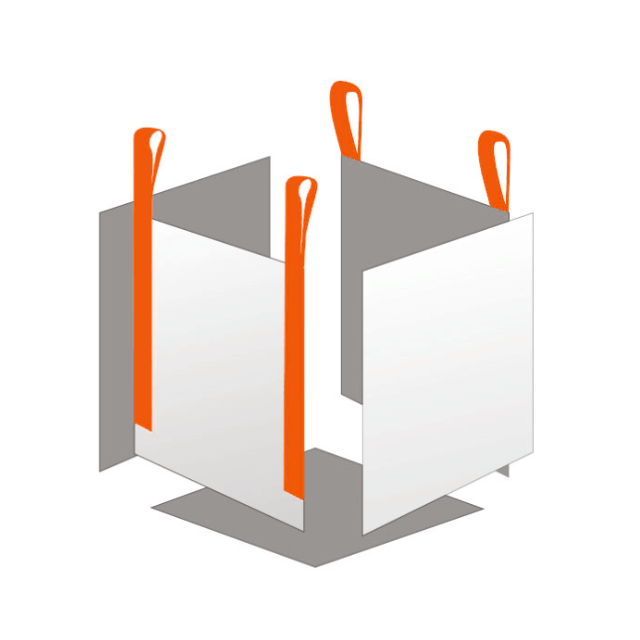
4 Panel

4-panel bags are constructed with four individual pieces sewn together to form a square structure.
When filled, a 4-panel bag will hold its square shape similar to other construction types.
Ideal for storage due to the way they hold their shape when filled.
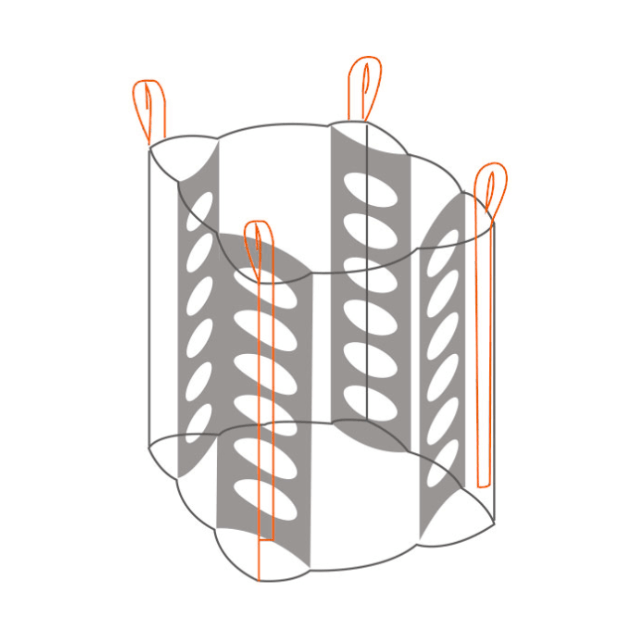
Baffle Bag

The Baffle bag design is constructed by sewing polypropylene baffles across the four corners of the FIBC bag. Thus, when the bag is filled, the baffles prevent the sides from bulging out or falling over when being stored or transported, giving the bags a straight shape.
Common Application in the Food, Chemical and Pharmaceutical industries.

Tubular

The body of a tubular jumbo bag is designed with a tubular fabric, which is usually sewn on a square bottom panel. As a result, there are no seams on the body part, this creates a more aesthetically pleasing packaging.
Moreover, with only a top and bottom piece sewn into the body, fibc tubular bags are great for fine and granular materials.

Big Bags FIBC

Conductive Bag

Conductive FIBCs are used when transporting flammable powders or when flammable vapors, gases or combustible dusts are present. Made from non-conductive polypropylene fabrics interwoven with conducting threads sewn into the fabric.

UN-Certified

UN Bags are designed to carry hazardous products and their use is regulated by the UN Association. There are four types 13H1, 13H2, 13H3, 13H4.
Several tests are applied to the UN Certified Big Bags in order to verify.
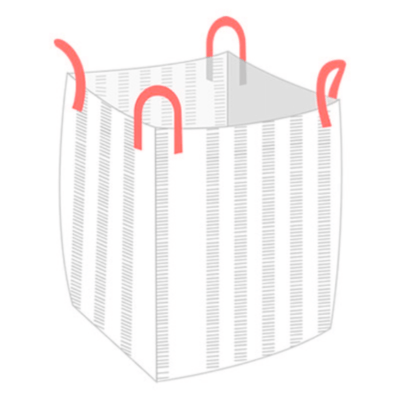
Ventilated Bag

Bag with air vents along the woven fabric on its body. This is a kind of mesh fabric that allows easy air-flow to the contents inside and prevents moisture build-up.
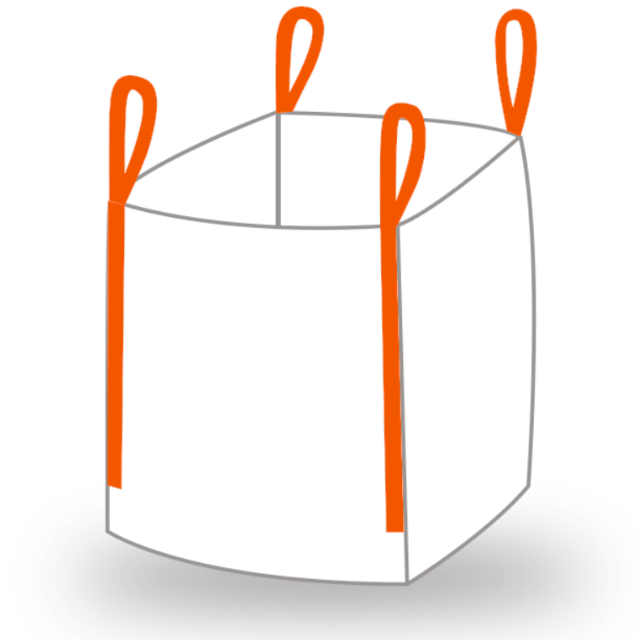
Lifting Style

4 Loops

4 Corner seam lift loops are sewn along the side seams of the bag. The loop begins and ends at the same point on the bag forming a tear drop shape.
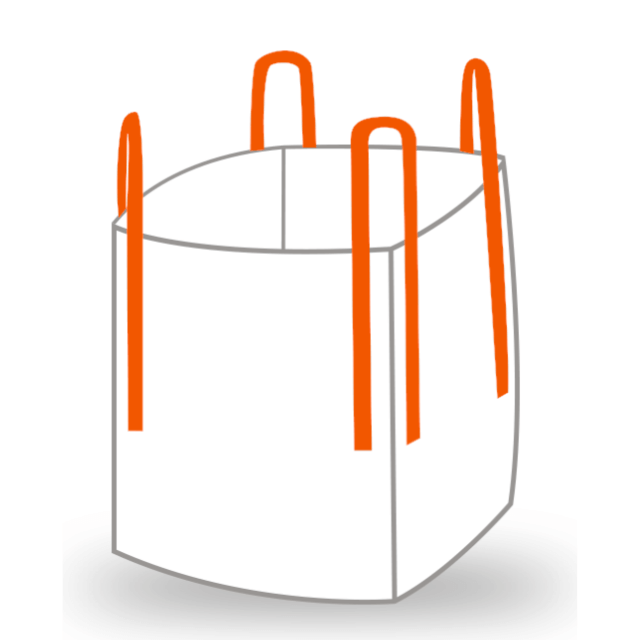
Cross Corner Loops

Cross corners lift loops are sewn onto the body of the FIBC and form an “arch” over each corner.

2 Loops

2 Loop Big Bags are constructed using tubular body fabric which directly get extended to create 2 lifting loops, making them one of the most cost effective bags.

1 Loop

Similar to double loop bags, one loop bags are constructed using tubular body fabric which directly get extended to create 1 lifting loop.

Sleeve Tunnel Loops

Tunnel loops or “sleeves” are made from bulk bag body fabric. They can be sewn into the top or base of the FIBC. The benefit of this type of loop is excellent stability during lifting and transport. Providing easy operation with forklift

Filling Style

Open Top

Open Top means that the bag is completely open with no ability to be closed. Common apllications: Soil, Sand, Rock, Construction
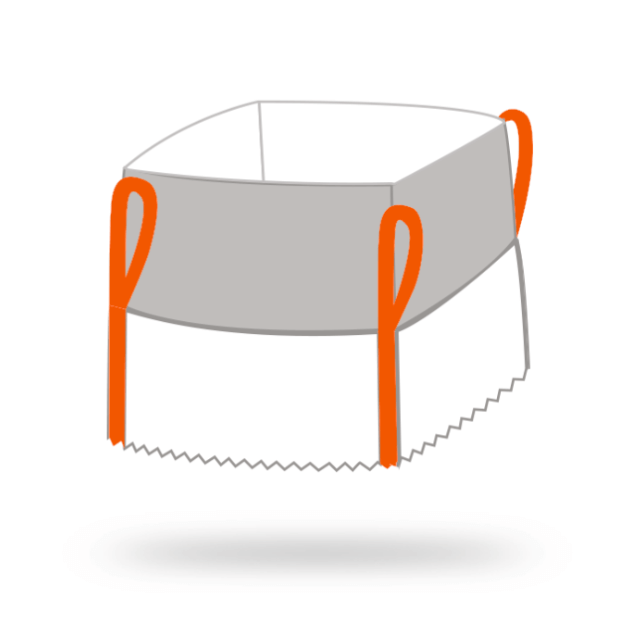
Top-Skirt/Duffle

A skirt is attached to the upper body of the bag. It offers easy filling along with protection when closed.
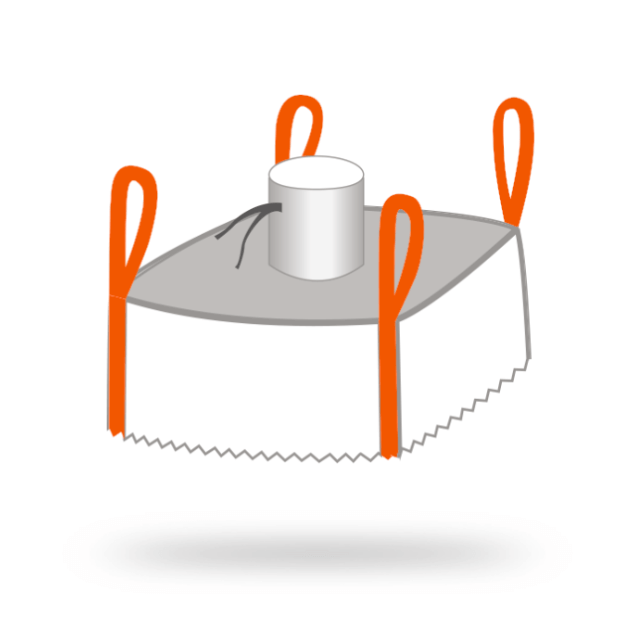
Top-Spout

A top panel and cylinder attached to the upper body of the bag. The filling spout provides for clean and controlled transfer of material from the filling equipment to the bag. After filling, the spout can be tied off with pre-attached ties.
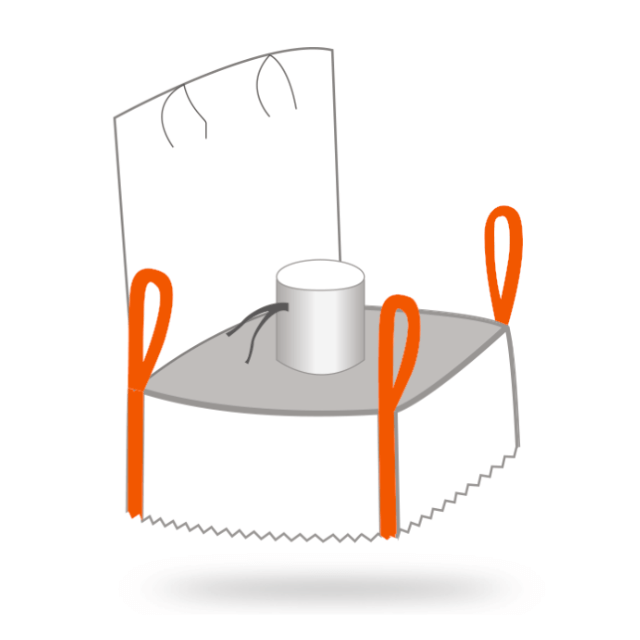
Top-Spout with flap

Same with the top-spout filling style , with an additional polypropylane fabric panel, offering extra protection.
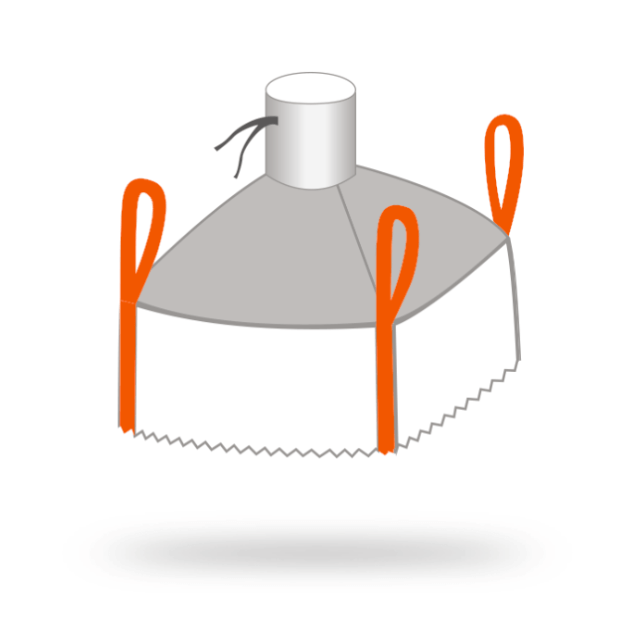
Conical Top-Spout

Same with the top-spout filling style, also having a Conical bag top shape as a cone. These bags are especially suitable to pack tacky products which are not so free flowing.
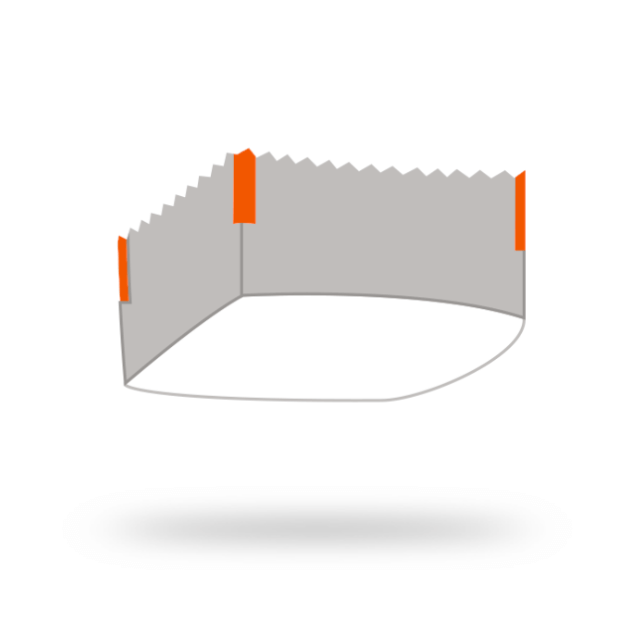
Discharge and Closure Systems

Flat Bottom

The closed/flat bottom big bag has a palin polypropylane fabric panel at the bottom. It is the most cost-effective closure system, but it does not provide a discharge option.
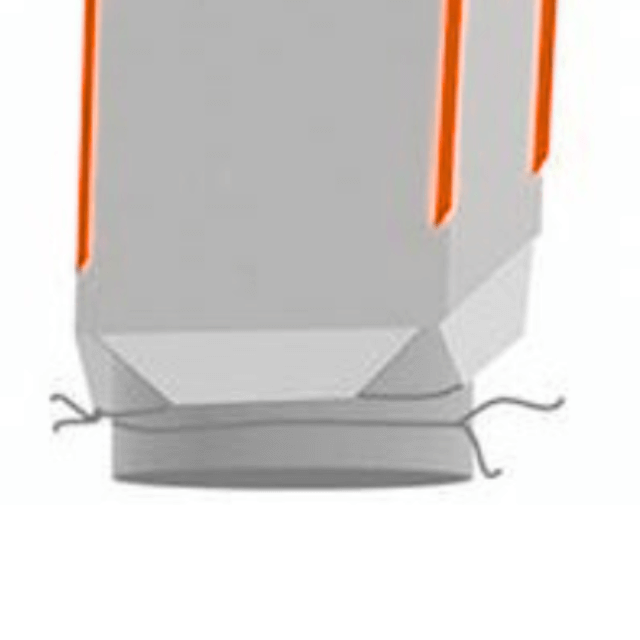
Bottom Skirt

The bottom opening also features a flap very similar to the one found on duffle top bags. This flap is tied/sealed when the bag is used and during filling, then untied for rapid discharge of the product.
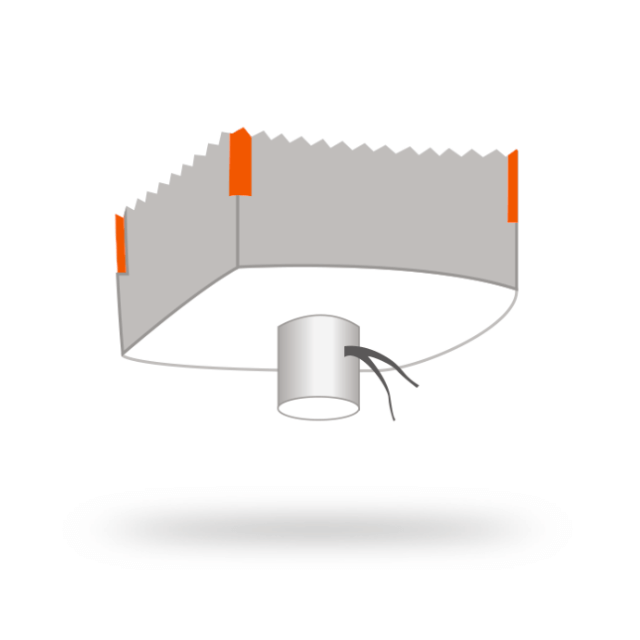
Discharge Spout

This bag has a funnel-like opening at the bottom, which allows the bag to be easily emptied. These spouts are tucked into the bottom of the bag and remains closed until you are ready to release the product.
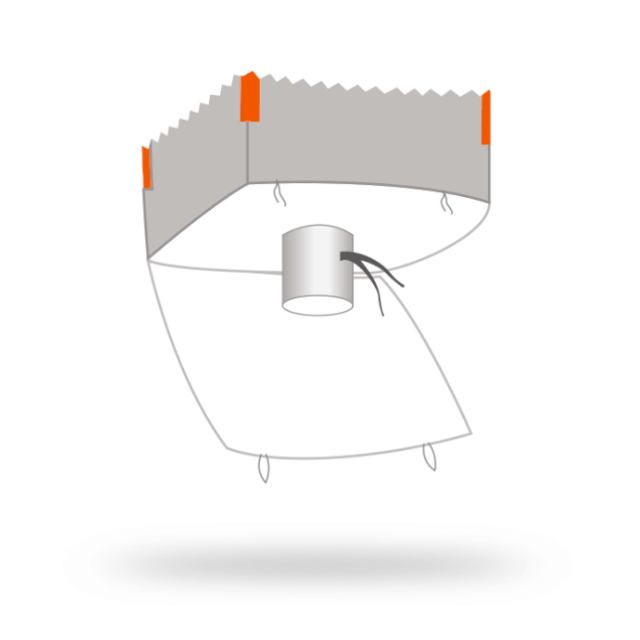
Bottom Spout with Flap Cover

The discharge spout with flap protects the entire bottom of the bulk bag. These are often times used for ease of discharge, provide additional protection and keep the discharge area clean.
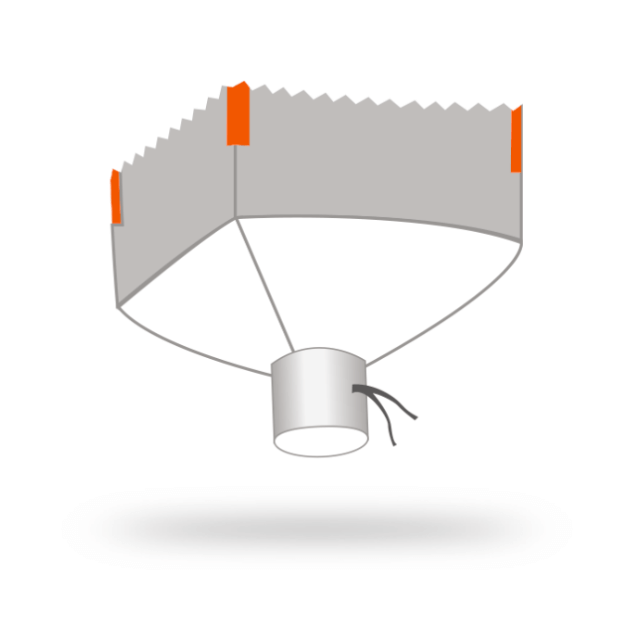
Conical Bottom Spout

These bags are used for materials that do not flow as freely as dry powders or grains. The bottom of these bulk bags are cone shaped which allows dense/sticky materials out of the bag.

Common Use of Bags

Construction

These Builder Bags are specially made for construction such as sand/gravel, stones. The standard dimensions are ½ or 1 cubic metre. The standard bags can be delivered quickly from stock. The Builder Bags can also be printed with your logo and text or change the body colour of the bag.

Ventilated Big Bags for Agricultural purposes or herbs

Raw agricultural products like potatoes, onions, or beans can be stored and transported in big bags of this kind. Agricultural products big bags are often made from VENTILATED fabric which allows air to circulate inside-out of the F.I.B.C. Ventilated big bags can come with net panels for even better ventilation.

Recycling

F.I.B.C. bags are often used to pack recycled resources, like glass, batteries, parts, and especially recycled plastics. Recycling materials are either packed in standard big bags or Q-bags. The fabric of the big bags used in the recycling industry is sometimes coated and is often printed. These F.I.B.C.s come in various designs regarding lifting loops, filling and discharging, according to the needs of each recycled kind.

Dry Nuts and Seeds

Strong and often duffle bags are appropriate for the storage and transportation of seeds and dry nuts. Usually, this kind of big bags come ready to carry 1500 kg.

Cement

Cement big bags are usually designed as single or double loop F.I.B.C.s. A liner is crucial for cement big bags because it prevents moisture from damaging the cement. Often a company logo is printed on the cement bag.

Food Grade and Pharma

Big bags for pharmaceuticals have the highest requirements on food safety and quality control. Sometimes special in-liners from aluminium or from special polymers are needed to protect the pharmaceuticals.

Big bags to be used in the pharmaceutical and food sectors are manufactured in "clean rooms" (sterilised manufacturing lines) according to ISO 9001:2008, ISO 22000, H.A.C.C.P., A.I.B. and BRC IOP grade A regulations. Safety, hygiene and suitability of raw materials are guaranteed to the client in a reliable and long-lasting manner.

Construction

These Builder Bags are specially made for construction such as sand/gravel, stones. The standard dimensions are ½ or 1 cubic metre. The standard bags can be delivered quickly from stock. The Builder Bags can also be printed with your logo and text or change the body colour of the bag.

Recycling

F.I.B.C. bags are often used to pack recycled resources, like glass, batteries, parts, and especially recycled plastics. Recycling materials are either packed in standard big bags or Q-bags. The fabric of the big bags used in the recycling industry is sometimes coated and is often printed. These F.I.B.C.s come in various designs regarding lifting loops, filling and discharging, according to the needs of each recycled kind.

Dry Nuts and Seeds

Strong and often duffle bags are appropriate for the storage and transportation of seeds and dry nuts. Usually, this kind of big bags come ready to carry 1500 kg.

Ventilated Big Bags for Agricultural purposes or herbs

Raw agricultural products like potatoes, onions, or beans can be stored and transported in big bags of this kind. Agricultural products big bags are often made from VENTILATED fabric which allows air to circulate inside-out of the F.I.B.C. Ventilated big bags can come with net panels for even better ventilation.

Dry Nuts and Seeds

Strong and often duffle bags are appropriate for the storage and transportation of seeds and dry nuts. Usually, this kind of big bags come ready to carry 1500 kg.

Food Grade and Pharma

Big bags for pharmaceuticals have the highest requirements on food safety and quality control. Sometimes special in-liners from aluminium or from special polymers are needed to protect the pharmaceuticals.

Big bags to be used in the pharmaceutical and food sectors are manufactured in "clean rooms" (sterilised manufacturing lines) according to ISO 9001:2008, ISO 22000, H.A.C.C.P., A.I.B. and BRC IOP grade A regulations. Safety, hygiene and suitability of raw materials are guaranteed to the client in a reliable and long-lasting manner.